
Woodstock Directory Holdings by Year
Woodstock's historical shelf is divided between the Margaret Field Crane Local History Reference Area and the McHenry County Historical Society research library. The public library is the best first stop for a Woodstock name or street. The society adds county directories, plats, tax material, deeds, photographs, and vertical files. Call ahead for an exact issue because neither keeper claims every year survives.
| Collection | Years | Where Held | Access |
|---|---|---|---|
| Official city directories | 1914, 1922/23, 1935/36, then 1938–90 at roughly two-year intervals | Woodstock Public Library | Reference area; selected scans online |
| MCHS city directories | 1916, 1935/36, two or three per decade through the 1970s, 1980 and 1990 | McHenry County Historical Society | Research library; verify each issue |
| Haines criss-cross books | 1977 forward, with gaps | Woodstock Public Library | In-person reverse search |
| Telephone directories | 1947; 1956; 1958; 1962–83; 1985–91; 1994 forward in an older listing | Library and MCHS | Reference use; gaps possible |
These are known holdings, not a continuous run. If a person appears in 1922, move to the next surviving issue and fill the interval with a newspaper notice, census return, deed, or telephone listing. That honest gap is more useful than a guessed date.
Woodstock Library's History Room
The library places historical books beside the tools needed to interpret them: county atlases, school yearbooks, newspapers, a Local History Surname Index, an obituary index, and licensed genealogy databases. Its Woodstock Sentinel and Northwest Herald microfilm can explain why a family vanished between issues. In-library access includes Ancestry Library Edition, while HeritageQuest, HeritageHub, Newspapers.com Illinois, ProQuest Historical Newspapers, Fold3, and other resources broaden a name search.
The local-history holdings page is worth checking before a visit.
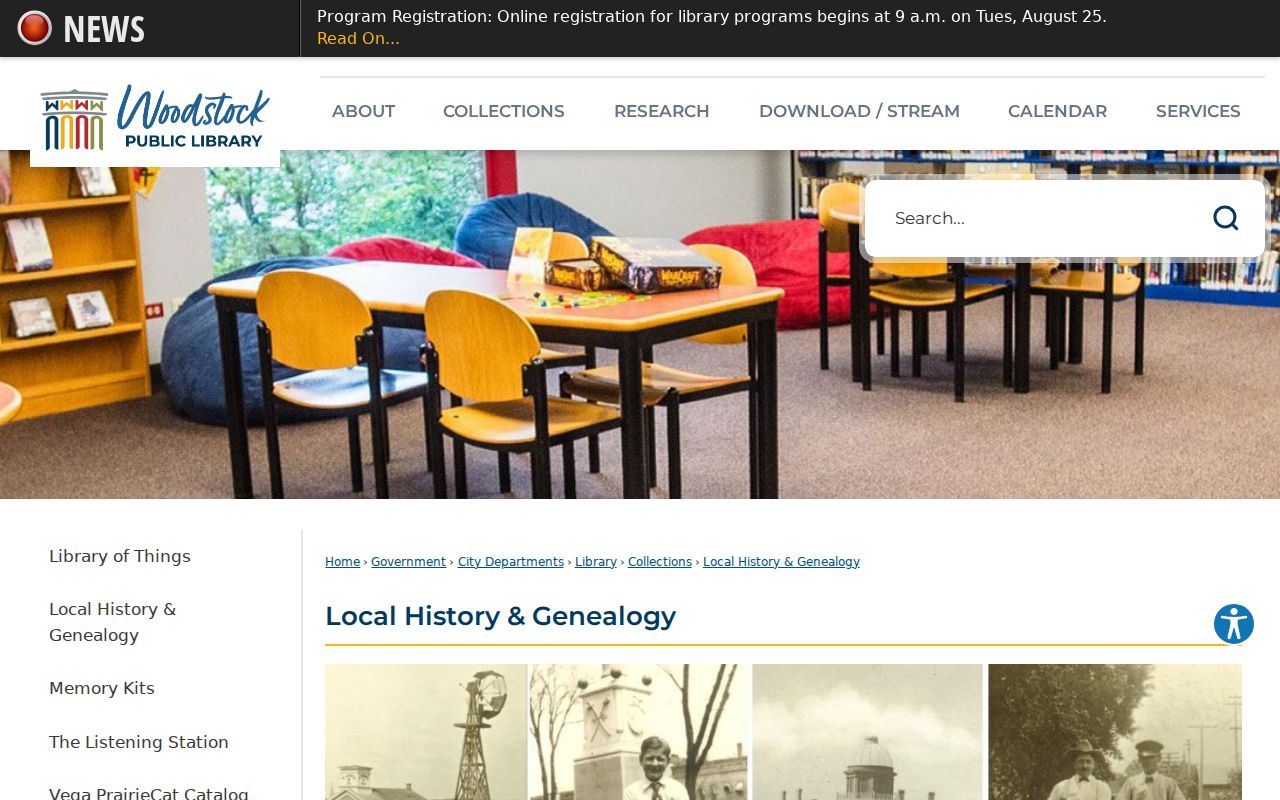
The captured page confirms that directories form part of a staff-supported local collection. Recent yearbooks are at the reference desk, and Todd School archive material is supervised. Official school records are not in that archive.
A surname search should include Mc and Mac forms, apostrophes, initials, married names, and the spelling printed in the source. Woodstock's long-established and newer families can appear under several forms. The library's index is a pointer to the underlying item, so the directory line, obituary page, or yearbook image should still be read in full. Ask staff whether a licensed database must be used inside the building and whether fragile material has supervised handling rules.
Woodstock's Missing 1909 Directory
Digitized council minutes from 1852 through 1916 revealed a reference to a 1909 Woodstock directory. The library has not located that volume, so 1914 remains its earliest known surviving copy. Librarians have asked the public for a copy that can be scanned and preserved. The absence is itself a documented local-history finding.
The Historic Woodstock collection preserves the minutes and related publications that led to the search.
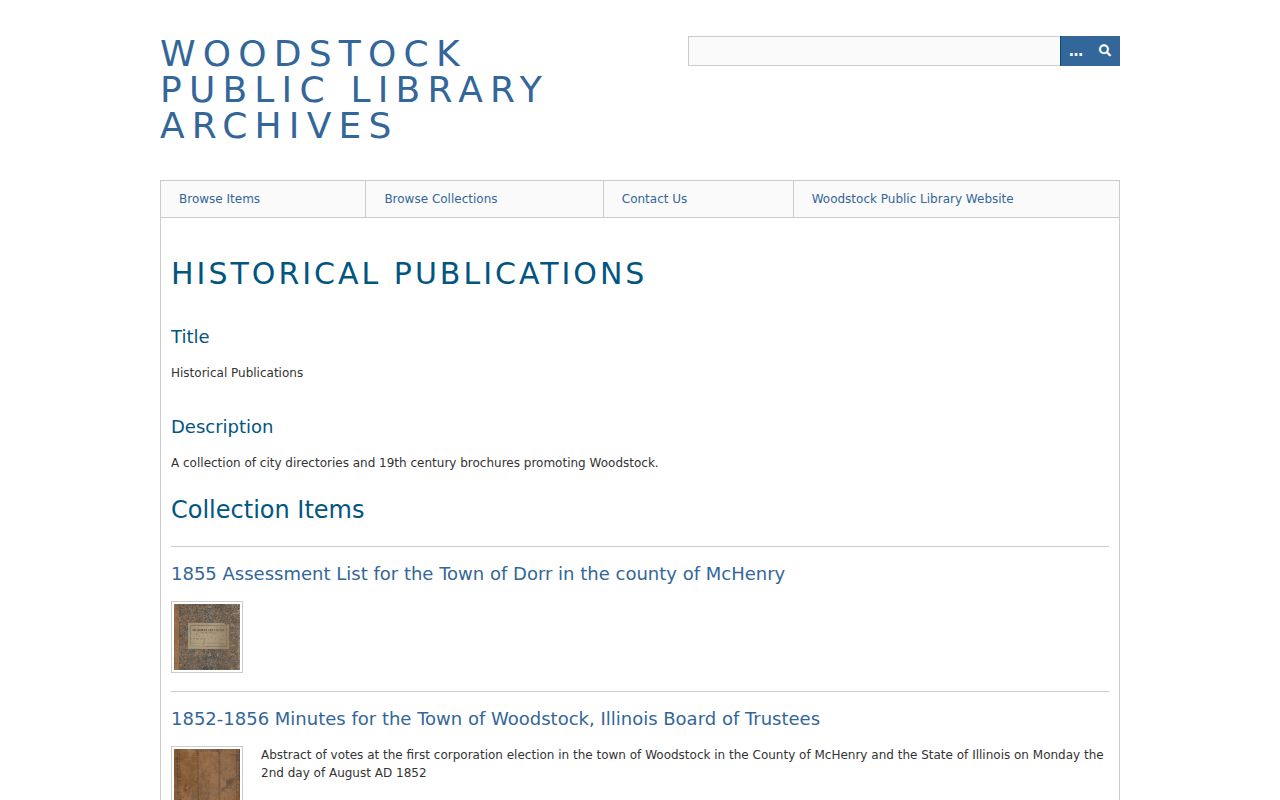
The archive image is a reminder not to infer a 1909 household from the later book. A newly found copy could change the known record.
Read Woodstock's 1914 Directory
P. R. Forman compiled the earliest known surviving library issue. The digitized 1914 Official Directory contains much more than an alphabetic list. Its front matter covers officials, wards, fire-alarm boxes, post-office service, schools, associations, population figures, street numbering, and abbreviations. The citizen section ties adults to addresses, trades or businesses, and sometimes telephone numbers.
The scan lets a researcher preserve the page number and exact printed spelling, both vital when initials or short forms recur.
The volume's order also matters. A resident line can be tested against the classified business section, municipal roster, church or association list, and the street directory in the same book. Those links are stronger than a modern guess about what an old trade meant. Photograph or transcribe the title page, publisher, date, abbreviation key, and entry together. That small habit keeps a clipped name from losing its source and prevents an abbreviation from turning into an invented fact.
| Printed name | Surname and given name or initials, copied exactly as typeset |
|---|---|
| Family notation | Spouse, widow, or household wording when the publisher included it |
| Work line | Occupation, trade, employer, or nature of business |
| Place | Street and number, interpreted with the numbering explanation |
| Phone or group | A telephone number or public association when printed |
- Criss-cross directory
- A reverse section arranged by street and house number instead of surname.
- Householder index
- A list that links the person responsible for a household to its address.
- Abbreviation key
- The publisher's guide to shortened words and marks. Read it before expanding an entry.
Woodstock Directory Numbers Explained
The Forman volume reports 4,653 Woodstock residents on January 31, 1914, including 1,206 families, but only 3,296 directory-listed residents. It also prints census totals of 1,683 in 1890, 2,507 in 1900, and 4,331 in 1910. The difference is not a flaw to smooth away. The directory's canvass sought people over age 18, while a census count includes children and other residents who may not receive their own line.
A publisher's count and a census total answer different questions. Preserve both and state how each was made.
Reverse Woodstock Directory Searches
The 1914 street section and later Haines criss-cross books solve the opposite problem from an alphabetic list. Start with a house number and street, then read the people attached to that place. Fire-alarm boxes listed by ward and intersection can orient an old number when the address is vague.
Street names may differ from a modern map. Woodstock sources document Wheeler as Norway, Todd as Adams, Washington as Chemung Road, and Eastwood as Park Avenue. Keep the printed form in notes and test the old name. For current records by address, use the Woodstock street directory process.
Trace Families in Woodstock Directories
A sound family-history trail records each appearance without assuming that two people with the same name are one person. Moves, initials, married names, widow notations, spelling shifts, and canvass dates all matter. Pair each printed book with a census close in time, but allow for a move between the two dates.
- Begin with the alphabetic section and copy the exact entry, page, address, and abbreviation.
- Turn to the street section to identify other listed people at the same address.
- Pair 1914 with the 1910 census, 1922/23 with 1920, and 1935/36 with both 1930 and 1940.
- Search the next surviving issue in both directions, noting each move or disappearance.
- Close a gap with the obituary index, newspaper microfilm, marriage index, probate file, or deed chain.
A disappearance may mean death, relocation, a missed canvass, or an unlisted adult. The Woodstock Sentinel obituary index reaches through 1937 as described by the library. Newspaper microfilm, FamilySearch marriages, probate records, and Recorder deeds can separate those possibilities.
Household continuity is best shown as a dated chain. One row might hold the book year, printed name, street, work line, phone, and the census or newspaper used for comparison. A sudden new surname at the same address can reflect marriage, a relative taking over, a sale, or an unrelated move. The printed volume alone cannot choose among them. When a deed is needed, search the owner through the Recorder rather than treating the resident line as proof of title.
Digital Woodstock Directory Companions
The Woodstock Public Library digital archive joins photographs, maps, documents, ephemera, and selected newspapers. It does not replace an official record, but it can put a face, building, event, or street scene beside a directory line.
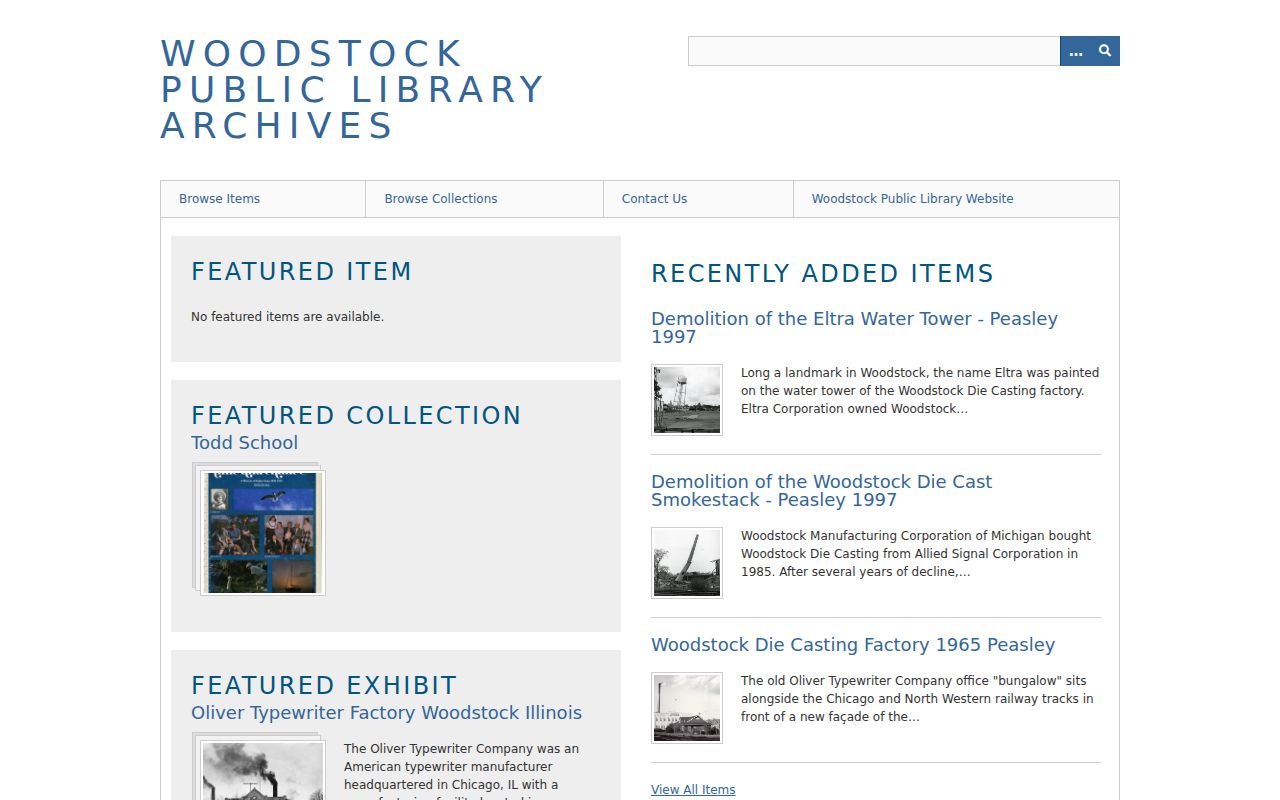
The collection view helps narrow a search by format and subject before physical material is requested.
Newspaper databases can supply a death, marriage, shop opening, or address change. Inspect the original page because an index may shorten a name or omit a relationship. A yearbook can add a face and activity for a student whom the adult directory excludes.
Map Woodstock Directory Addresses
A directory line becomes stronger when its address matches a period map. MCHS reports survey maps from 1837–39, an 1862 plat, atlases from 1872, 1892, and 1908, and later plat books. Woodstock Sanborn maps survive for 1885, 1893, 1898, 1905, and 1912. An original 1932 set at MCHS is described as being in poor condition.
The countywide resource inventory shows how directories, atlases, census files, and property records fit together.
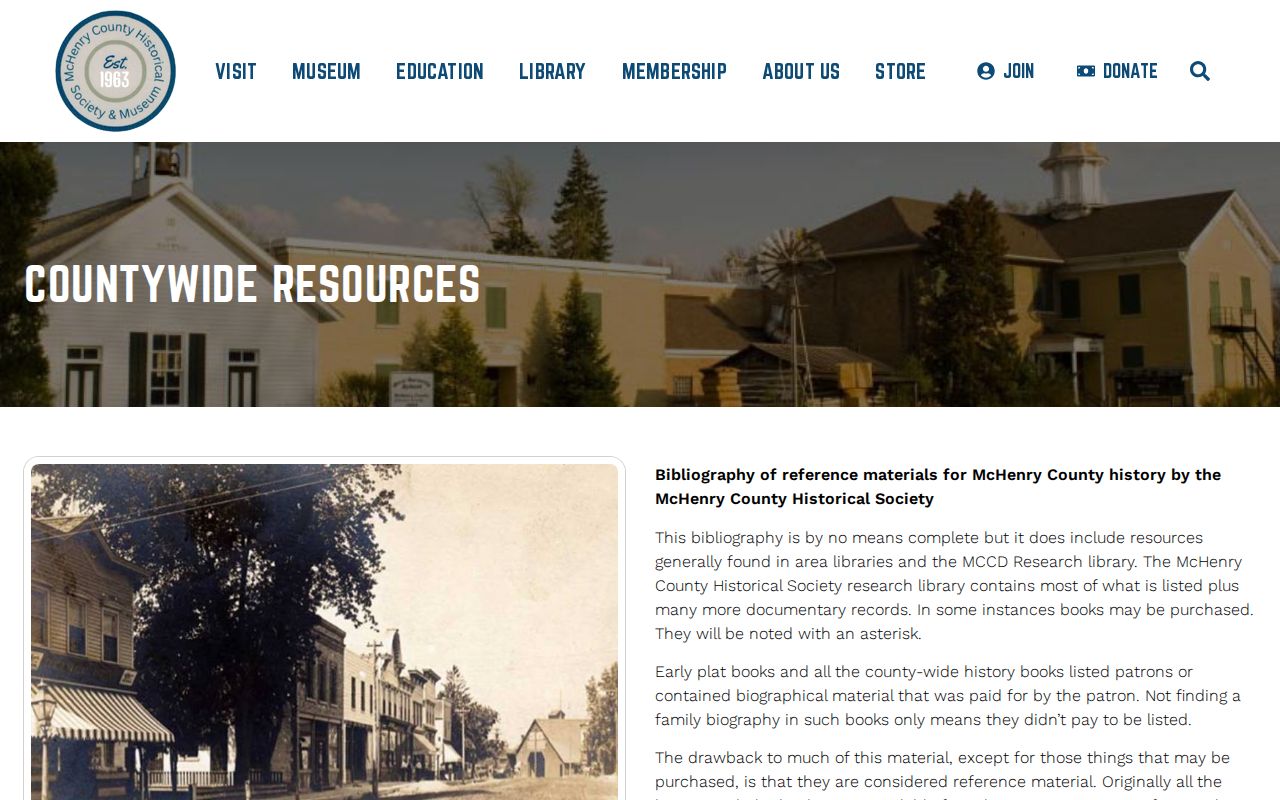
The county scale matters when a household sat beyond Woodstock's city boundary or entered through annexation. A city-book absence may send the search to a township directory.
Maps also guard against a false address match. The same house number may recur on different streets, and street names can change while the building stays put. A Sanborn sheet adds the footprint, construction context, and nearby landmarks; an atlas or plat supplies the wider land pattern. Record the map year and repository. The MCHS 1932 original is not interchangeable with the library's usable earlier copies, and the condition or format can affect what can actually be read.
Extend Woodstock Directory Research
The historical society's research library adds vertical files, photos, deeds, tax material, and staff research help.
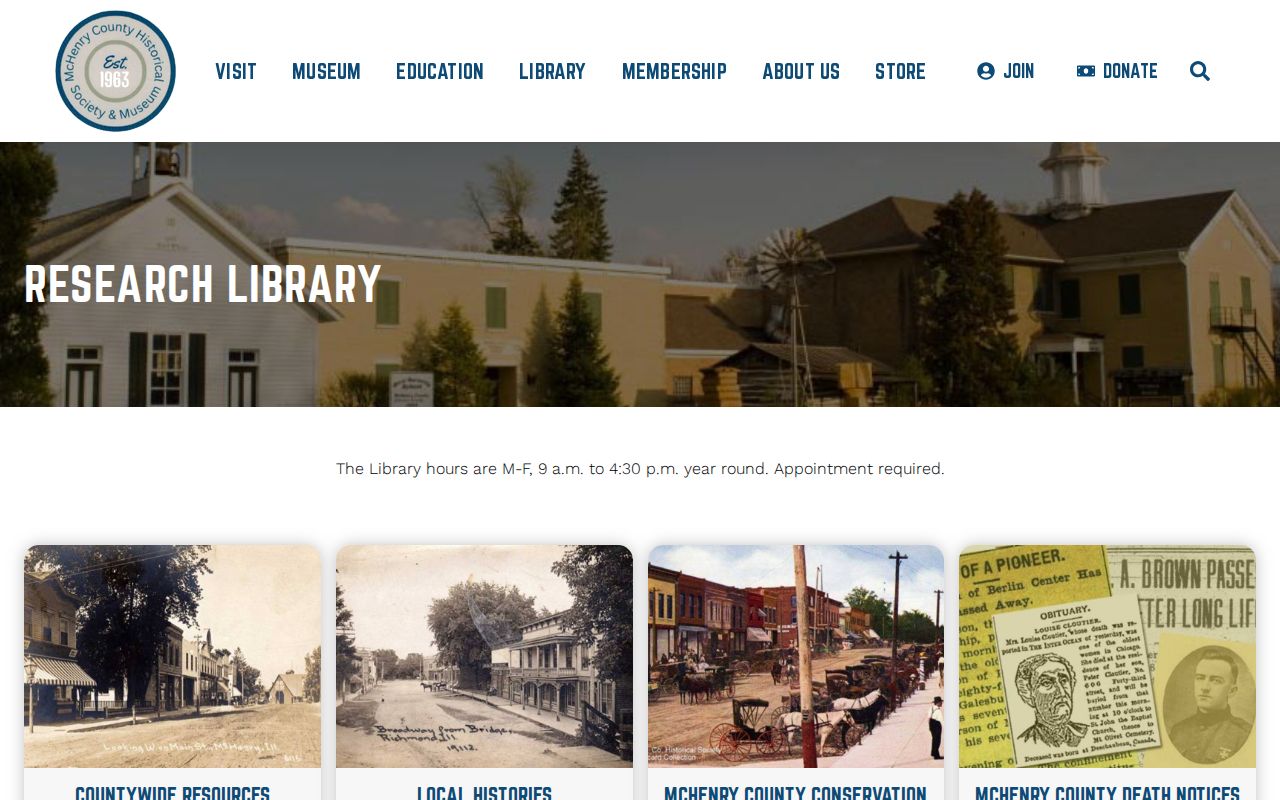
The capture supports a practical fallback when Woodstock library holdings skip a year or the subject lived beyond the municipal line.
For government series, search IRAD. Poll books, voter registers, tax books, naturalization files, probate packets, deeds, court files, jail registers, and minutes may survive there. Federal naturalization may route to the National Archives at Chicago. Before 1906, county and local courts could naturalize, so both routes deserve a check.